

The materials entering today’s waste stream are changing quickly, and the systems responsible for collecting, transporting, tracking, and processing them must change too.
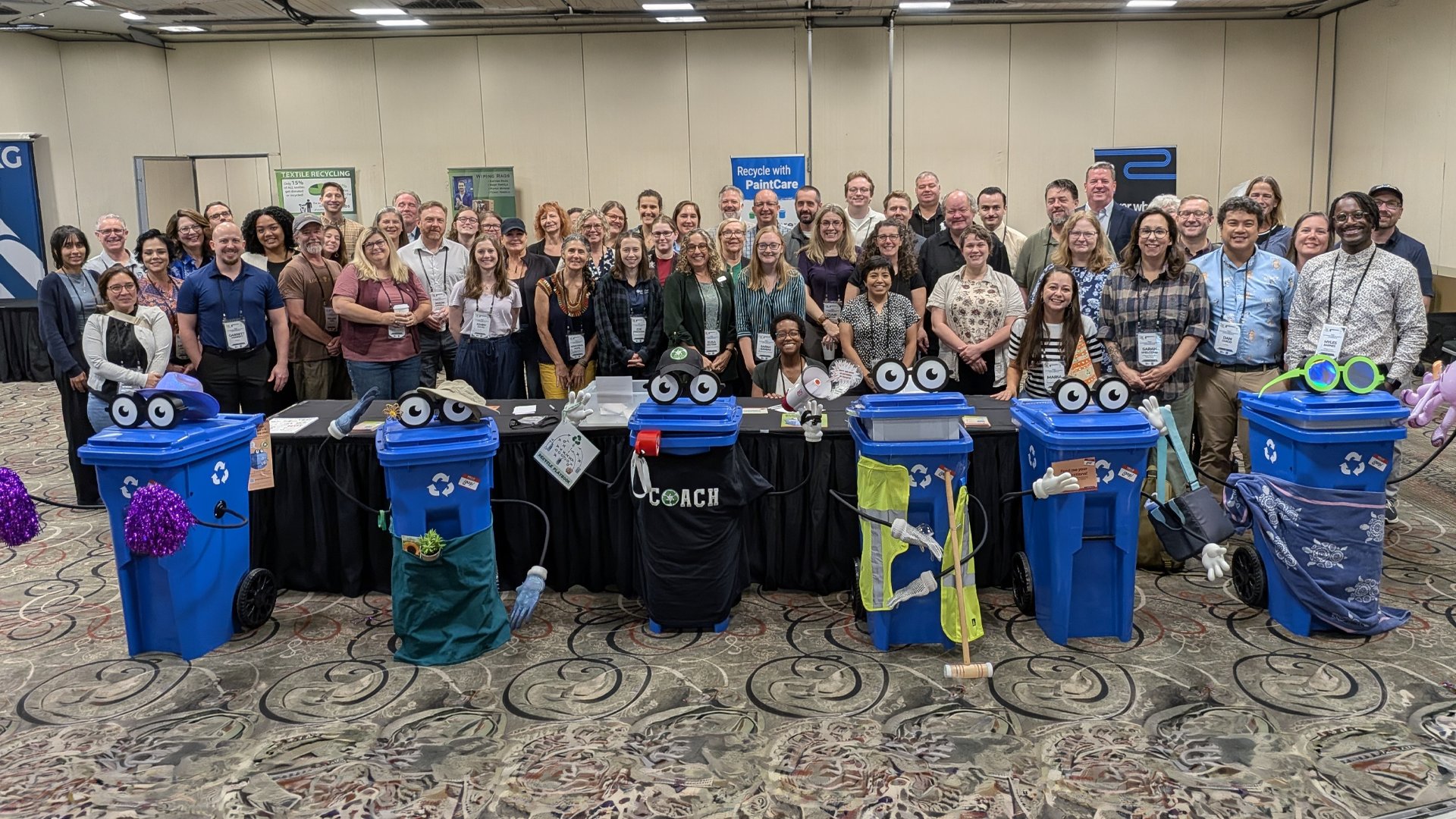
That message came through clearly at the 2026 Illinois Circularity Conference in Tinley Park, where ARXG joined recyclers, municipalities, regulators, processors, educators, and product-stewardship advocates for two days of practical conversations about the future of circularity.
Across discussions about batteries, packaging, hazardous waste, reuse, extended producer responsibility, and public education, one common theme emerged.
Collection is only the beginning.
Many traditional collection systems were designed for products and materials that looked very different from those entering the waste stream today. The rise of lithium-ion batteries and devices with embedded batteries is placing new pressure on infrastructure that was not designed to manage these increasingly complex materials.
Post-consumer vapes brought this challenge into focus at ICC 2026. A disposable vape may be small, but it can contain a lithium battery, electronic components, plastic, residual liquid, and other regulated or difficult-to-manage materials.
According to the U.S. Environmental Protection Agency1, e-cigarettes contain both nicotine and lithium batteries, making them hazardous waste under the Resource Conservation and Recovery Act. Nicotine is acutely toxic, while lithium batteries can catch fire when damaged, particularly during transportation or compaction at waste and recycling facilities. For these reasons, the EPA advises schools and businesses not to place e-cigarettes or their components in ordinary trash or recycling bins.
These challenges still remain: schools are confiscating vape devices and becoming unplanned collection points, municipalities are responding to residents’ disposal questions, while recyclers and community organizations are encountering products their facilities may not be designed or funded to manage properly.
Placing a box at a collection site may provide a starting point, but the box alone does not resolve what happens next. As the event’s recap report emphasized, a collection network can make it easier to gather material, but it does not automatically create the capacity needed to safely sort, transport, process, recover, and return that material to productive use.
Organizations exploring take-back programs often begin by asking what type of collection or containment system they need. That is an important consideration, but it is only one part of a dependable program.
Organizations must also determine who can participate, which materials will be accepted, how instructions will be communicated, how collected materials will be stored and transported, and what happens when a receptacle reaches capacity. Programs also need plans for damaged or potentially hazardous items, performance reporting, downstream processing, and future expansion.
Depending on the application, a complete program may include collection containers and receptacles, compliance technology, logistics, reporting, and downstream partner coordination. Together, these elements give applicable materials a clearly defined path beyond the collection point.
Several ICC discussions also reinforced the importance of making collection programs understandable and convenient for the people expected to use them.
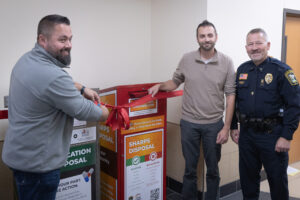
Take Illinois’ Residential Sharps Collection Program for example. Recently, Winnebago County recently established collection locations throughout the county, allowing residents to obtain sharps containers and return them sealed during normal business hours. Early participation demonstrated the value of providing an accessible disposal option for a material that previously lacked a convenient local pathway.
Illinois has also made funding available to eligible units of local government for residential sharps collection. Eligible expenses can include educational materials, individual collection containers, collection receptacles, transportation-related fees, and disposal costs.
Convenient access supports participation, but consistency matters just as much. Programs need dependable servicing, clear material guidelines, appropriate handling procedures, and a realistic downstream plan.
Collection totals can show how much material moved through a program, but useful data should reveal more than volume alone.
Depending on the program, organizations may need visibility into participation by location, service frequency, material volumes, contamination, capacity requirements, transportation activity, program costs, recovery outcomes, and opportunities for expansion.
This information can help identify which locations are performing well, where additional education may be needed, and whether a program is ready to scale.
Data is becoming increasingly important as producer-responsibility programs, grant requirements, and other circularity initiatives place greater emphasis on measurable performance. Programs that capture useful information from the beginning are better positioned to demonstrate results and adapt over time.
One of the strongest lessons from ICC 2026 was that circularity depends on functioning connections:
If any of those connections are missing, the loop remains incomplete.
This is especially important for materials that combine multiple components or require special handling. Collecting more of a difficult material creates value only when the program is prepared to manage what it receives.
For communities, schools, retailers, healthcare organizations, and other institutions, the practical question is not simply, “Can we collect this?”
It is, “Can we build a dependable system around it?”
ARXG appreciated the opportunity to participate in ICC 2026 and learn from organizations working throughout Illinois’ evolving circular economy. The conference reinforced that meaningful progress requires collaboration among public agencies, program operators, manufacturers, processors, logistics providers, community organizations, and program participants.
No single container, technology, or policy can solve every materials-management challenge on its own. Building a dependable circular system requires connecting each part of the process, from the moment an item is collected to the next life it can serve.

Sign up our newsletter to get update information, news and free insight.