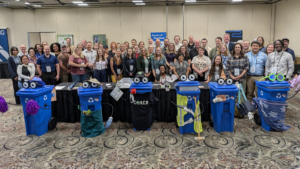

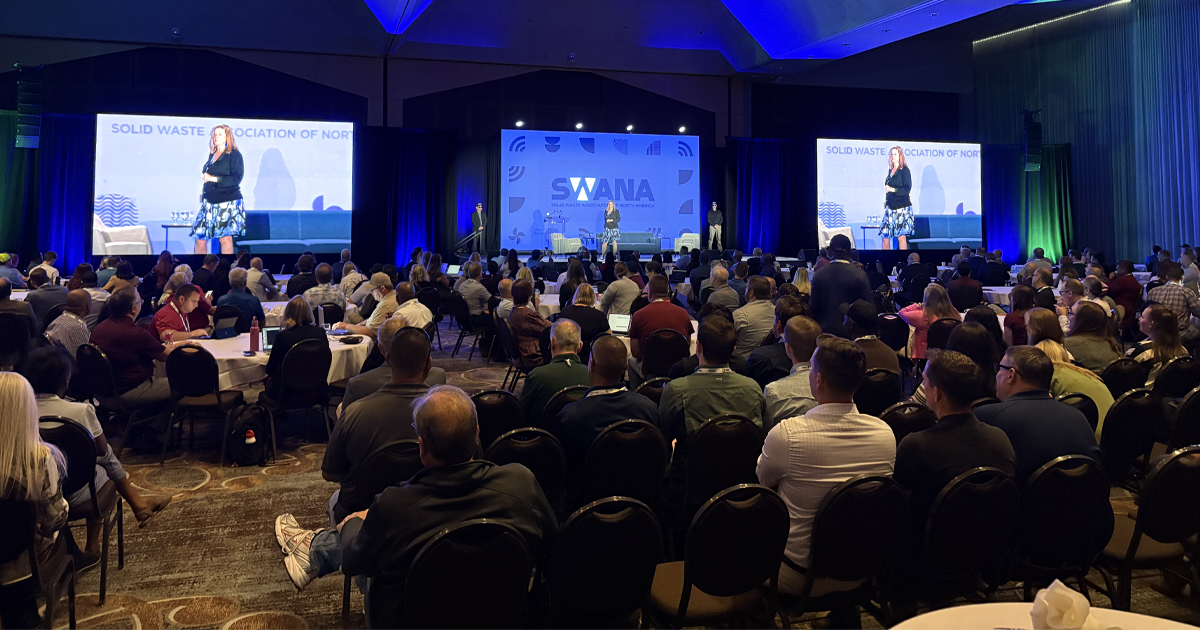
Very few conferences naturally bounce from vape collection to after-hours pickleball, a live fire demonstration, and even a children’s book about battery safety. That unexpected mix of serious industry challenges and approachable public education is part of what made RCon® 2026 so compelling.
Our team attended this year’s event in St. Louis, where the schedule rarely followed the usual conference formula. Now that the excitement has cleared and the disc golf nets have been packed away, the harder work lies in the months ahead.
Held immediately before RCon®, the National Recycling Coalition’s Circularity Forum set the tone for the week by focusing less on distant promises and more on the contracts, data, local action, and partnerships needed to make circularity work in practice.
Circularity cannot remain an objective. It must function as an operating system built around collection, sorting, financing, product design, end markets, and accountability.
In North America, most people understand what to do with familiar curbside materials. The pathway becomes less obvious for a used vape, inhaler, or medication injector pen. These products may contain batteries, residual contents, or components requiring different packaging, handling, transportation, and downstream pathways.
Someone may want to do the right thing and still have no idea where a product belongs. What RCon® reinforced is that uncertainty is not always an education failure. Sometimes it reveals a genuine gap in the system.
A collection model built for one material cannot simply be relabeled and expected to work for another. The same concern applies to kitchen-sink solutions that accept many unrelated products without clearly explaining what happens after return.
Front-end convenience for the consumer does not remove the need to determine what is accepted, how each material is handled, which organizations are qualified to manage it, and what documentation should follow.
The container, instructions, service schedule, transportation relationships, reporting requirements, and funding model must reflect the material being collected. Every participating organization needs a clearly defined role.

Vape collection offered one of the clearest examples of the move from good intentions to practical implementation.
These devices combine several challenges in one small product. Vapes commonly contain lithium batteries and residual nicotine, which is why the U.S. Environmental Protection Agency (EPA) advises consumers not to place them in household trash or recycling. The EPA instead directs individuals toward household hazardous-waste collection programs.
At RCon®, the Product Stewardship Institute (PSI) presented findings from a Missouri vape-collection pilot launched in September 2025. Eight participating sites and four DEA Take Back Day locations collected a reported 1,737 devices weighing 281 pounds. The presentation also listed a cost of $1,500, although the materials did not fully define which pilot expenses that figure included.
The results suggest that people will participate when collection is available. They also raise another question for complex waste streams: What happens when participation grows?
Another presentation reported that Boulder County’s annual vape-management costs increased from approximately $5,000 in 2023 to $17,278 in 2025 as participation increased. More devices entering a managed pathway is encouraging, but growth can require more service, supplies, staff involvement, and ongoing funding.
This is where a collection pilot begins to become a program, and policy is beginning to catch up.
In April 2026, Maine became the first state to enact an extended producer responsibility law specifically for electronic smoking devices. Other states are pursuing approaches that include product directories, sales enforcement, and restrictions on disposable devices.
These statewide responses are not interchangeable, but together they show that end-of-life vape management is moving beyond voluntary programs and into a wider policy discussion.
There is no universal formula yet, which makes today’s pilots especially valuable. Their lasting contribution may be what they teach the industry about participation, cost, access, and scale.

Collection infrastructure is only useful when people understand how to use it. RCon® offered several reminders that public education can be practical, memorable, and even a little unexpected.
One of the more distinctive examples came from Ryan Fogelman and Fire Rover, who paired live fire-prevention demonstrations with SUPERCHARGED! Batty and the Battery Rescue Team, a children’s book about battery safety.
It was an unusual combination, but that was precisely why it worked. The demonstration made an operational risk visible to industry professionals, while the book translated the same issue into something families and younger audiences could understand.
Other organizations approached public education from different angles. The Battery Network connected safer collection with shared responsibility across the battery lifecycle, bringing consumers, businesses, manufacturers, municipalities, and collection partners into the same conversation. Your Very Favorite presented customized activity books designed to help communities explain local waste programs and involve families in the learning process.
What made these examples memorable was not novelty alone. Each gave the information a clear audience and a specific job to do.
“More public education” cannot compensate for inconvenient access, unclear acceptance rules, or a return process that asks too much of the participant. The strongest educational efforts give people a clear next step. They explain what is accepted, where it can be returned, and what to do when a product falls outside the usual pathway.

Once someone understands what to do, the program must give them a realistic way to do it. Permanent collection sites remain important, but RCon® reinforced that access can take several forms.
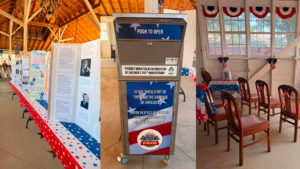
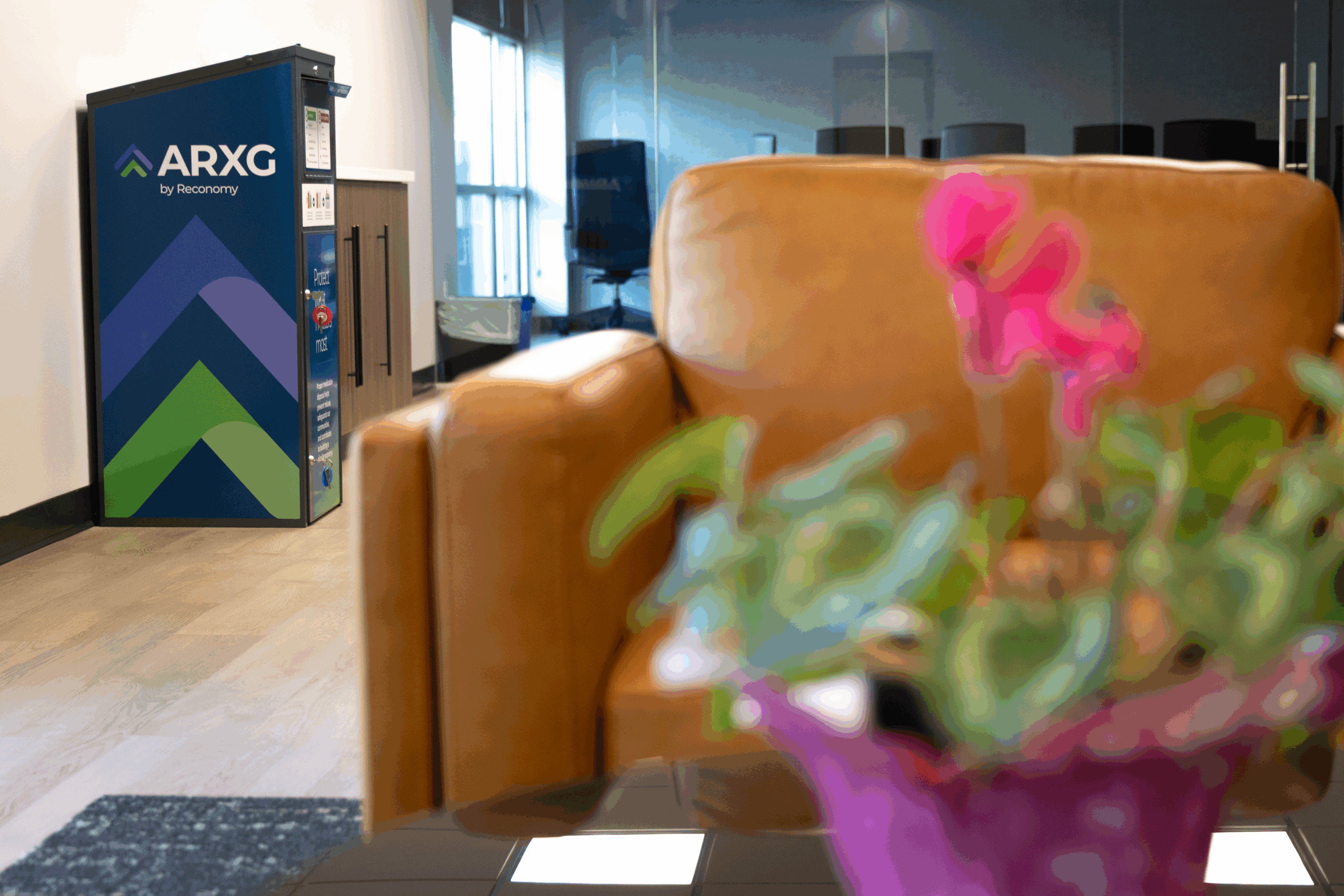
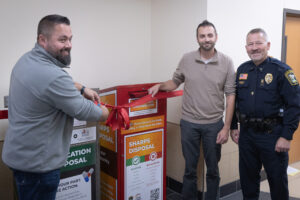
A secure kiosk may provide visible, ongoing collection in a municipal building, pharmacy, retailer, or other familiar location. A temporary event may create an opportunity to introduce a new program and collect a concentrated volume of material. Point-of-use containers can capture products where they are generated, while mail-back can bring the collection pathway directly to people who may not live near a permanent site.
These approaches do not have to compete with one another. A well-designed program may combine several methods, allowing the strengths of one to offset the limitations of another.
The number of collection methods does not, by itself, tell us whether a program is accessible, let alone successful. A more useful question is whether the intended participant has a convenient, understandable, and appropriately supported way to return the product.
That distinction becomes especially important for rural communities, distributed organizations, school systems, healthcare networks, and other programs that cannot reasonably expect every participant to use the same type of collection point.
The best access model is the one that fits the material, geography, participants, and program requirements.
Access also needs to be measured after launch. Knowing which locations are active, when service is needed, and where participation is falling short can help program teams adjust instead of waiting until the final report to discover what did not work. Useful data should not simply describe a program. It should help improve it.
RCon® did not offer one universal model for take-back, nor should it have. Different materials, participants, and communities require different approaches.
Still, a few principles carried across the event: make the issue understandable, provide a practical next step, design the collection method around the material, use information to support decisions, and prepare in advance for participation to grow.
Those ideas align closely with how ARXG approaches take-back. We support purpose-built collection products, mail-back, participant communications, fulfillment, and program technology while coordinating with qualified third parties whose transportation and downstream roles remain clearly defined.
If your organization knows a product needs to come back but the rest of the pathway is still unclear, let’s work through it together.
Until then, we hope to see you at the next RCon®.
Sign up our newsletter to get update information, news and free insight.