Safely manage and transport post-consumer pharmaceutical waste with proven solutions that streamline handling, reduce misuse, and protect others and the environment.

Unused, expired, and unwanted medications, inhalers, and other pharmaceutical waste that are improperly disposed of pose serious risks to public health and the environment. Misuse, diversion, and environmental contamination are real challenges that demand immediate attention.
Healthcare facilities, law enforcement agencies, municipalities, and community members need a clear, safe, and accountable system to collect and manage pharmaceutical waste throughout its lifecycle.
Starting a take-back scheme is an easy, practical, and fully compliant way to manage pharmaceuticals. ARXG’s full-service programs help organizations and communities safely collect, transport, and dispose of post-consumer waste, keeping materials out of landfills and minimizing environmental impact. By partnering with our experts, you can ensure that pharmaceutical waste is managed securely, traceably, and in compliance with all local, state, and federal regulations.
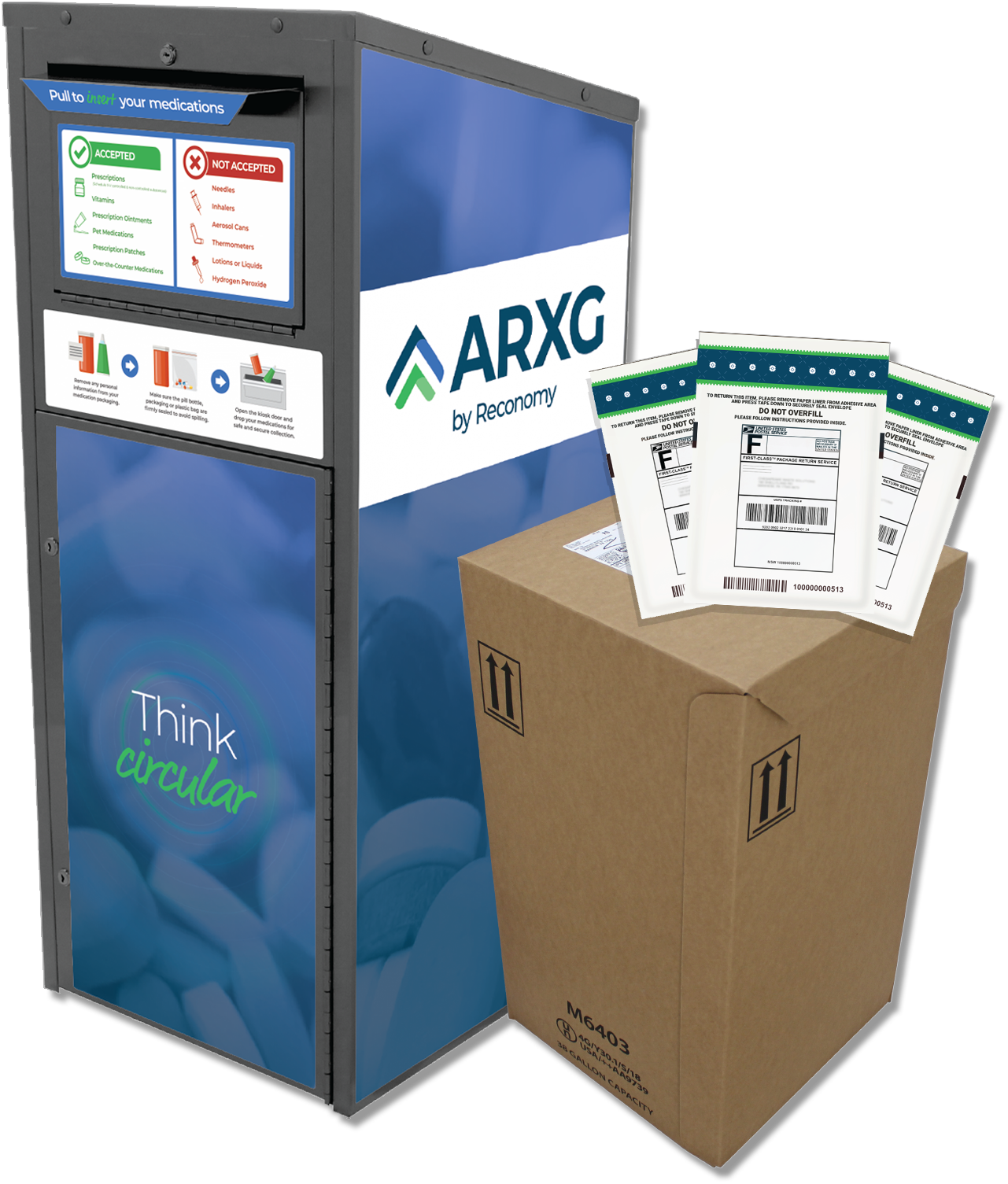
Industry-grade drop boxes combining robust design, highly functional usability, and trusted performance across various applications and organizational needs.
Compliant, patented bag-in-box design fits virtually any drop box, with quick installation and tamper-evident protection for efficient, seamless operations.
Safe, convenient, and accessible collection systems for EPR-regulated medications and inhalers, including prepaid shipping for easy and compliant disposal.
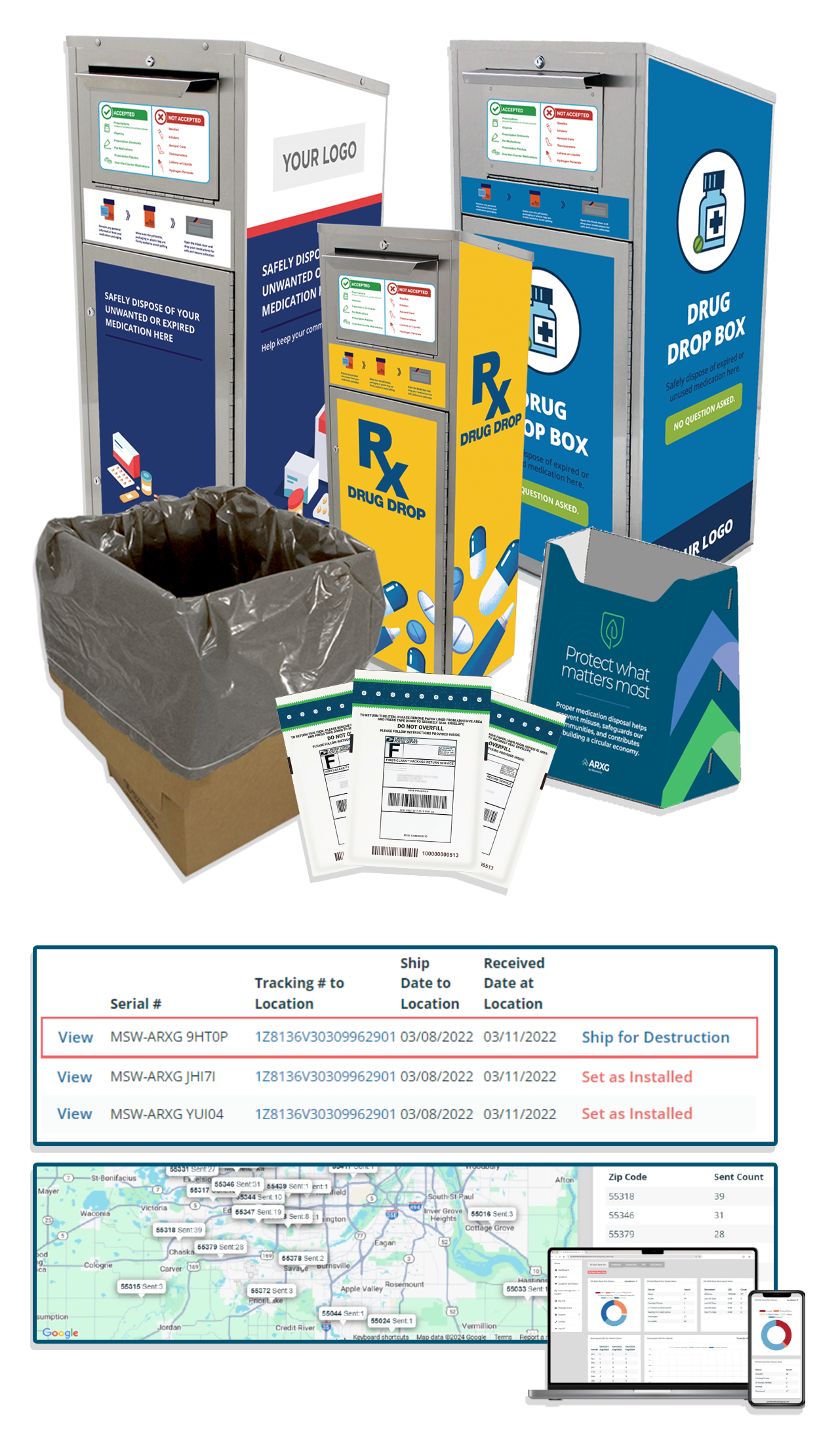
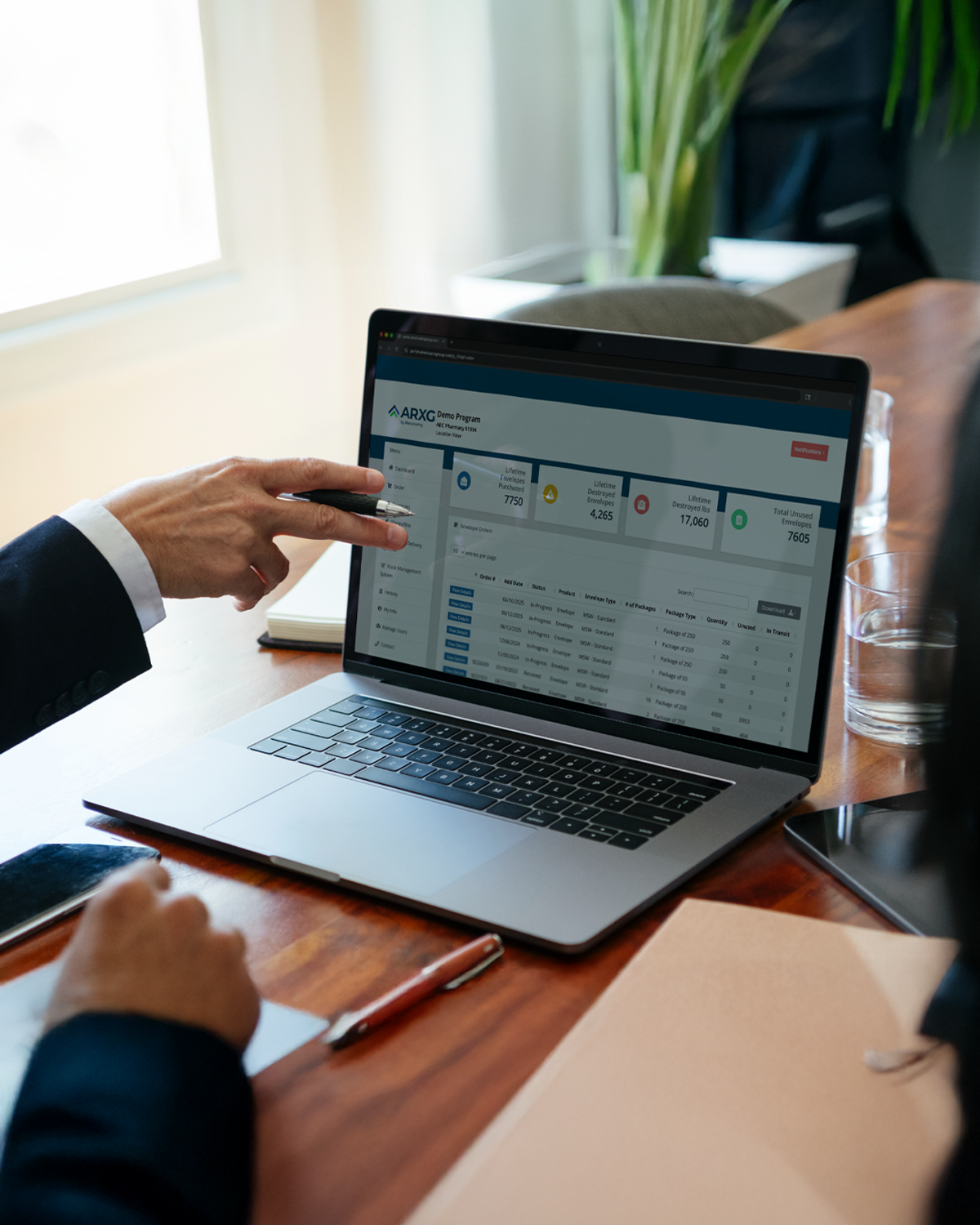
ARXG’s portal management system tracks serialized products throughout their entire lifecycle. Integrations with postal and carrier APIs provide live shipment updates, replacing manual logs with unique identifiers and pre-loaded tracking information.
Access individual destruction certificates and use our best-in-class reporting tools to analyze disposal metrics, consumption performance, inventory status, license and client data, shipment activity, and other incidents.
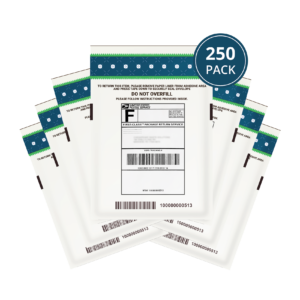
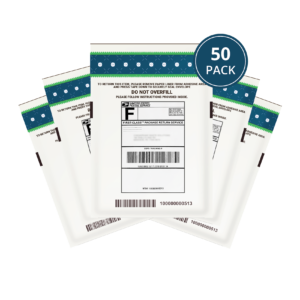
Inner packaging meets regulatory requirements for tamper-evidence, waterproofing, and trackability to ensure contents are protected. Read more.
Outer packaging is strong and durable, designed to protect contents during shipping while minimizing risk to people and the environment. Read more.
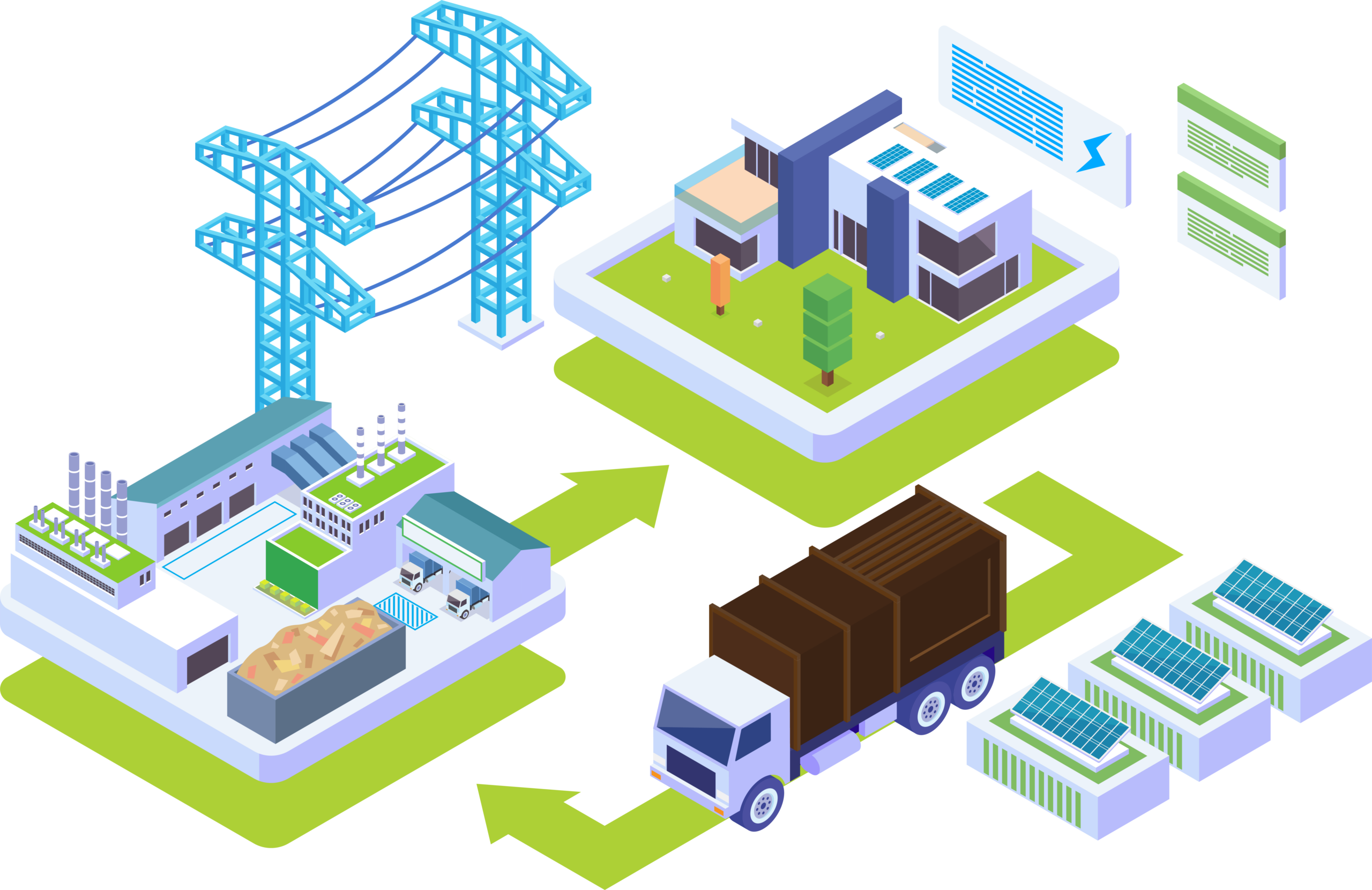
In partnership with specialized facilities, post-consumer materials are managed through a circularity-first approach that minimizes risk and harm to people and the environment.
We remain committed to upholding safety, sustainability, and regulatory adherence, ensuring materials are securely collected, processed, and returned responsibly to their appropriate end-of-life pathway.
Regulations for starting a pharmaceutical take-back program vary by state and locality, but typically require compliance with DEA, EPA & state environmental departments, and state board of pharmacy rules. Businesses must ensure only “ultimate users” (patients or their families) return drugs, use approved collection solutions, and partner with licensed collectors or reverse distributors.
Our collection receptacles are secure drop-off points intended for pharmaceutical waste take-back only and follow regulatory guidance for safe collection and disposal. Please keep medications in their original bottles or containers, and mark out or remove any personal information so it can’t be seen.
Accepted: Prescriptions (Schedule II–V controlled and non-controlled substances), vitamins, prescription ointments, pet medications, prescription patches, and over-the-counter medications.
Not accepted: Needles/sharps (shop solutions), inhalers (shop solutions), aerosol cans, thermometers, lotions, liquids, and hydrogen peroxide.
If you are using an approved ARXG Medication Take-Back Envelope— liquids may be disposed of only if they are up to 3.38 fl. oz, remain in a tightly sealed original container, and are placed into a sealed plastic bag with the enclosed absorbent pad. Follow all instructions accompanied with the envelope and do not overfill.
Collected pharmaceutical waste is disposed of using regulator-approved destruction methods designed to prevent diversion and protect human health and the environment. For most medications, this includes high-temperature incineration, a carefully controlled process operating at temperatures in excess of 2,000°F that safely destroys pharmaceutical compounds. Where possible, this process allows for waste-to-energy conversion, helping reduce reliance on landfilling while supporting renewable, carbon-negative energy.
More than 99.9% of emissions from this process consist of normal components of air—nitrogen, oxygen, and water vapor. The remaining 0.1% is highly regulated and maintained well below federal guidelines and permitting thresholds.
Disposal facilities use sophisticated air-pollution control equipment with real-time monitoring to ensure emissions remain well below permitted limits and are subject to regulator-approved third-party audits to verify compliance. These controls help ensure disposal is conducted in an environmentally responsible manner.
To operate as an authorized collector for medication take-back, entities must modify their existing Drug Enforcement Administration (DEA) registration to include collector authority, ensuring compliance with 21 CFR 1317.40. Eligible entities include retail pharmacies, hospitals/clinics with on-site pharmacies, and registered law enforcement agencies.
Businesses must maintain secure records of collected drugs, weights, transfer dates, and destruction receipts to demonstrate compliance with DEA and EPA requirements. Reporting formats can differ between jurisdictions.
Handling controlled substances requires strict compliance with DEA 21 CFR 1317 regulations. Authorized collectors must use secure, permanently-installed locked receptacles with sealed inner liners, comply with all applicable state and local laws, and maintain required documentation and reporting records. Read more.
EPA compliance is also required, which involves managing pharmaceutical waste as hazardous when necessary and adhering to federal disposal guidelines to prevent environmental contamination, including the Resource Conservation and Recovery Act (RCRA) rules for hazardous pharmaceuticals. Read more.
Costs for a pharmaceutical waste take-back program depend on the methodology (collection receptacle, mail-back, event), volume of waste, and level of regulatory complexity. Typical expenses include supplies, shipping, destruction, labor, and program management fees.
Yes—some government agencies and local authorities offer grants or funding for pharmaceutical waste take-back programs, especially for community health initiatives and environmental protection. Availability and eligibility vary by location.

Our solutions are supported by a knowledgeable team dedicated to helping you with any questions or needs you may have.
1010 Summit Ave N
Sauk Rapids,
MN 56379
Call Sales +1 (855) 269-1750
Email Sales sales@arxg-reconomy.com
Please fill out the form so we can better understand your needs, and a member of our team will reach out to you promptly.